
How SkyDADU Evaluates DADU Projects for Equity Financing
Building Wealth Through High-Performance DADU Investments
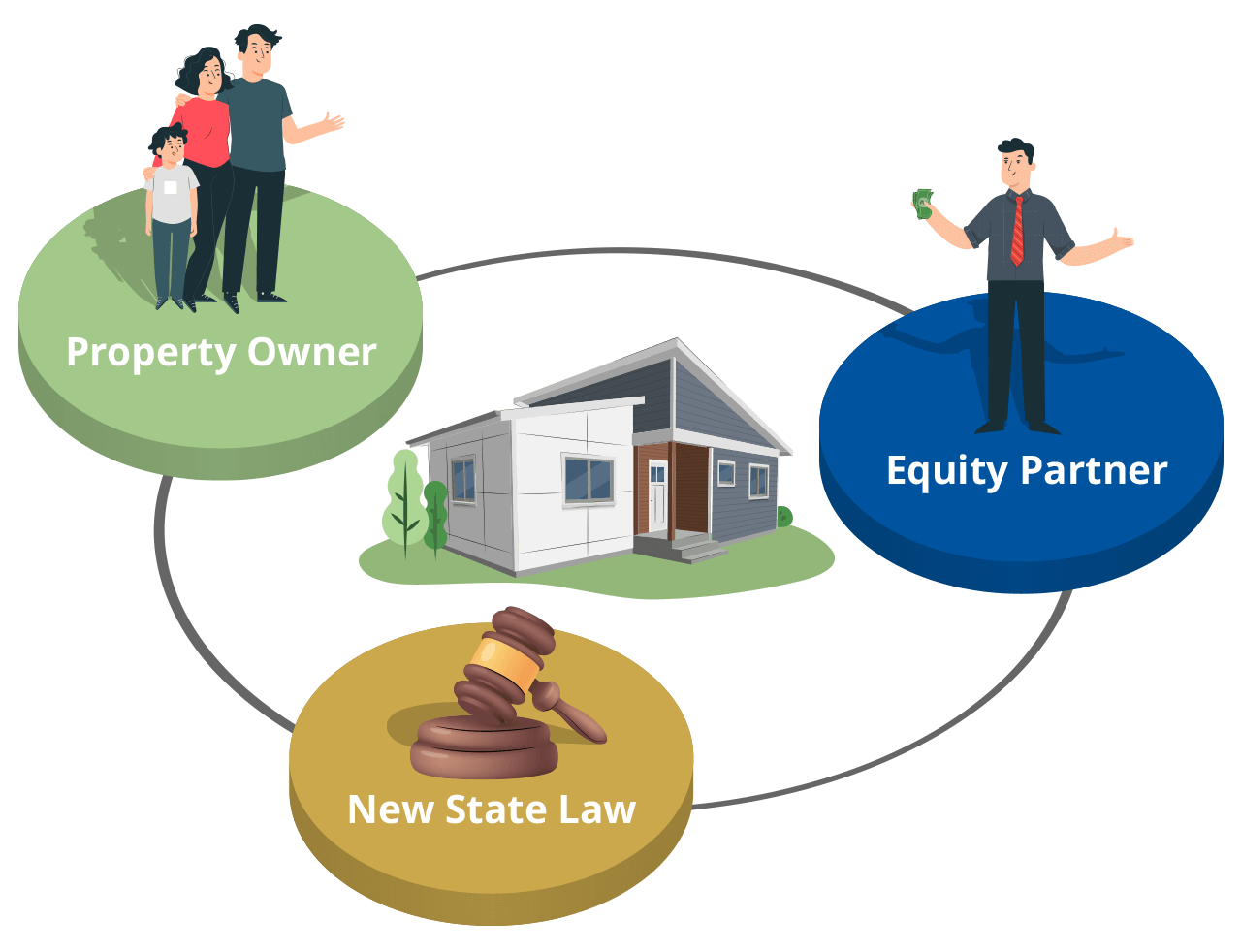
At SkyDADU, we are more than a design-build partner – we are also a potential equity partner. When evaluating whether to provide equity financing for a Detached Accessory Dwelling Unit (DADU) project, we focus on measurable financial performance, risk-adjusted returns, and long-term value creation.
Our goal is simple: partner on projects that generate compelling returns for both homeowners and SkyDADU while creating lasting value in the communities we serve.
Learn about equity financing vs debt financing measures that relate to DADU development such as equity coverage ratio, cash on cash return, and debt service coverage ratio (DSCR loans).
Equity Coverage Ratio, Return on Investment & Cash-on-Cash Return
Equity Coverage Ratio (ECR)
For homeowners pursuing a Downsizing or Multigenerational Strategy, one of the first metrics SkyDADU evaluates is whether there is sufficient equity in the existing property to support the project.
Our objective is not necessarily to determine whether the future home sale can repay 100% of the DADU construction cost. Instead, we evaluate whether the projected proceeds from the sale of the primary residence can cover at least 50% of the DADU construction cost, which serves as our minimum qualification threshold. Any remaining balance can typically be refinanced through a conventional mortgage or other financing solution offered by a commercial lending institution.
This approach allows homeowners to unlock the equity they have built over decades while minimizing upfront cash contributions, preserving financial flexibility, and potentially realizing substantial tax advantages. In many cases, homeowners may qualify for primary residence capital gains exclusions, enabling a larger portion of their home equity to be reinvested into a new DADU, retirement goals, or long-term family wealth creation. By combining downsizing or multigenerational strategy with appropriate tax planning, homeowners can often maximize the value of their largest asset while creating a new home designed for the next stage of life.
Why This Metric Matters
The ECR (Equity Coverage Ratio) helps answer a simple but important question:
“Does the existing main home contain enough equity to support a successful Downsizing or Multigenerational Strategy?”
When the projected sale proceeds cover at least 50% of the DADU development cost, homeowners may qualify for SkyDADU’s Joint Venture Program – Downsizing (or Multigenerational) Strategy, allowing them to:
- Remain in their current home during construction.
- Move directly into a new custom DADU upon completion.
- Sell the primary residence after moving.
- Use a portion of the sale proceeds to reimburse SkyDADU.
- Finance any remaining balance through a conventional mortgage, if needed.
- Preserve a meaningful amount of equity for retirement, lifestyle needs, or future family wealth planning.
Example: Current Property Value Estimates
| VALUATION SCENARIO | ESTIMATED VALUE |
|---|---|
| Conservative | $1,450,000 |
| Most Probable | $1,600,000 |
| Premium | $1,760,000 |
Assume a Custom “Aging-in-Place” DADU with an outdoor living homes costs $600,000.
Under SkyDADU’s Downsizing (or Multigenerational) Strategy, we generally look for the projected home sale proceeds to cover at least 50% of the DADU construction cost, with stronger opportunities providing substantially greater coverage.
Equity Coverage Calculation / Most Probable Scenario:
- Home Sale Value: $1,600,000
- Estimated DADU Construction Cost: $600,000
Equity Coverage Ratio = Home Value ÷ DADU Cost
$1,600,000 ÷ $600,000 = 2.67x
Creating Long-Term Family Wealth
With a projected home value of $1,600,000 and an estimated DADU development cost of $600,000, the Equity Coverage Ratio is 2.67x.
In other words, the value of the existing home is approximately 267% of the DADU construction cost, providing substantial equity support for a Downsizing or Multigenerational Strategy.
Beyond the equity itself, many homeowners may benefit from significant tax advantages. For example, a married couple who owned and occupied their primary residence for at least two of the previous five years may qualify for the current homestead capital gains tax exclusion of up to $500,000.
In addition, the home’s adjusted cost basis – which generally includes the original purchase price plus qualifying capital improvements and renovations – can further reduce taxable gain. In many cases, this combination can result in a substantial portion of the sale proceeds being realized with little or no federal capital gains tax liability, subject to current tax laws and confirmation from the homeowner’s tax advisor.
This creates a unique opportunity: equity that might otherwise be lost to taxes can instead be redirected into a custom DADU, debt reduction, retirement planning, or other family wealth objectives. Rather than simply downsizing, homeowners can leverage decades of accumulated equity to create a purpose-built residence, preserve long-term property ownership, and establish a lasting real estate asset for future generations.
ROI – Return on Investment
In SkyDADU’s Joint Venture Program’s Investor Strategy, ROI is one of the primary metrics used to determine whether a project qualifies for equity financing. Because SkyDADU may provide some or all of the capital required to develop the DADU, we focus on the project’s ability to generate strong returns upon completion and sale.
When SkyDADU provides 100% of the project funding, net profits are typically shared 50% to the homeowner and 50% to SkyDADU. If the homeowner contributes 50% of the required project capital, the profit-sharing structure becomes 75% to the homeowner and 25% to SkyDADU. This approach rewards homeowners who invest their own capital while maintaining a partnership model where both parties are aligned in maximizing the project’s success.
ROI measures the total profit generated compared to the total capital invested.
Formula: ROI = (Net Profit ÷ Total Project Cost) × 100
Example: Joint Venture Profit Sharing
To help homeowners understand how our partnership model works, consider the following example:
- Total Project Cost: $450,000
- DADU Sale Price: $750,000
- Net Profit: $300,000
- Project ROI: 66.7%
Scenario 1: SkyDADU Provides 100% of the Project Capital
When SkyDADU funds the entire project, profits are typically split equally between the homeowner and SkyDADU.
| PARTNER | PROFIT SHARE |
|---|---|
| Homeowner | $150,000 (50%) |
| SkyDADU | $150,000 (50%) |
Total Profit $300,000
This structure allows homeowners to participate in the upside of the development without contributing upfront capital.
Scenario 2: Homeowner Contributes 50% of the Project Capital
When the homeowner contributes 50% of the required capital ($225,000), the profit-sharing structure shifts to reward their additional investment.
| PARTNER | PROFIT SHARE |
|---|---|
| Homeowner | $2250,000 (75%) |
| SkyDADU | $75,000 (25%) |
Total Profit $300,000
By contributing capital alongside SkyDADU, the homeowner retains a larger share of the project’s profits while still benefiting from SkyDADU’s financing, development expertise, and project management.
Our Partnership Philosophy
At SkyDADU, we believe the best projects are built when interests are aligned. Whether SkyDADU provides 100% of the funding or partners with homeowners who contribute capital, our joint venture model is designed to create a win-win outcome where both parties share in the value created by a successful DADU development.
Typical SkyDADU Target
For projects intended for resale, we generally prefer:
- Minimum ROI: 25%
- Typical ROI: 25%–35%
- Strong ROI: 35%+
COCR – Cash-on-Cash Return
For homeowners seeking long-term passive income, SkyDADU offers a Partnership 50% Financing Program designed to help property owners develop a DADU while retaining ownership of both the primary residence and the new rental unit.
Under this strategy, SkyDADU contributes 50% of the required development capital and the homeowner contributes the remaining 50%. Once the DADU is completed and leased, the rental income is initially shared 50% to the homeowner and 50% to SkyDADU.
Why the Income Is Shared
The initial profit-sharing period serves an important purpose: it establishes a documented operating history for the DADU. Most commercial and community banks prefer to see at least one year of rental income before underwriting a loan based on the property’s cash flow.
By demonstrating stable rental performance, homeowners can create the financial track record necessary to qualify for a future refinancing strategy.
Equity Buy-Back
Beginning in the second year, homeowners may have the opportunity to purchase SkyDADU’s ownership interest through a Debt Service Coverage Ratio (DSCR) loan offered by many residential and commercial lenders.
A DSCR loan is a type of mortgage that focuses primarily on the income generated by the property rather than the borrower’s personal income. Lenders evaluate whether the property’s rental income is sufficient to cover the proposed mortgage payment and related debt obligations.
Under SkyDADU’s Partnership 50% Financing Program, the equity buy-back amount is typically based on:
- SkyDADU’s original capital contribution
- Plus 8% simple annual interest
- Less any applicable distributions or credits as defined in the partnership agreement
The Long-Term Goal
Our objective is simple: help homeowners create a valuable income-producing asset and provide a structured pathway toward full ownership.
After the equity buy-back is completed, the homeowner owns 100% of the DADU and retains 100% of the future rental income, while continuing to benefit from potential property appreciation and long-term wealth creation.
In short, SkyDADU provides a bridge to help homeowners create a cash-flowing rental asset today, with a clear path toward full ownership tomorrow.
Our objective is simple: Help homeowners create a valuable income-producing asset that generates both immediate cash flow and long-term wealth.
Formula: COCR = Annual Pre-Tax Cash Flow ÷ Cash Invested
Typical SkyDADU Target
- Minimum COCR Target: At least 2× the prevailing 10-Year U.S. Treasury yield
- Typical COCR: 8%–12%
- Strong COCR: 12%+
Example:
- Annual Rental Income: $42,000
- Operating Expenses: $3,000
- Net Operating Income: $39,000
- Annual Debt Service: $12,500
- Annual Cash Flow: $26,500
- Capital Invested: $225,000
Annual Cash Flow: $26,500
COCR = 11.8%
In this example, the DADU generates $26,500 in annual pre-tax cash flow on a capital investment of $225,000, resulting in an 11.8% Cash-on-Cash Return. This exceeds SKYDADU’s preferred target range of 8%–12%, making it an attractive long-term rental investment opportunity.
What's the Next Step?
From feasibility to the last nail, our experts will help turn your DADU vision into reality. Let's get Started!
Already have the necessary funds to build your DADU?
Please contact Sockeye Homes so that you can get started with the Design-Build process.
Ready to get started or have questions?
Call Us
(253) 737-4456
Email Us
Using our easy contact form